
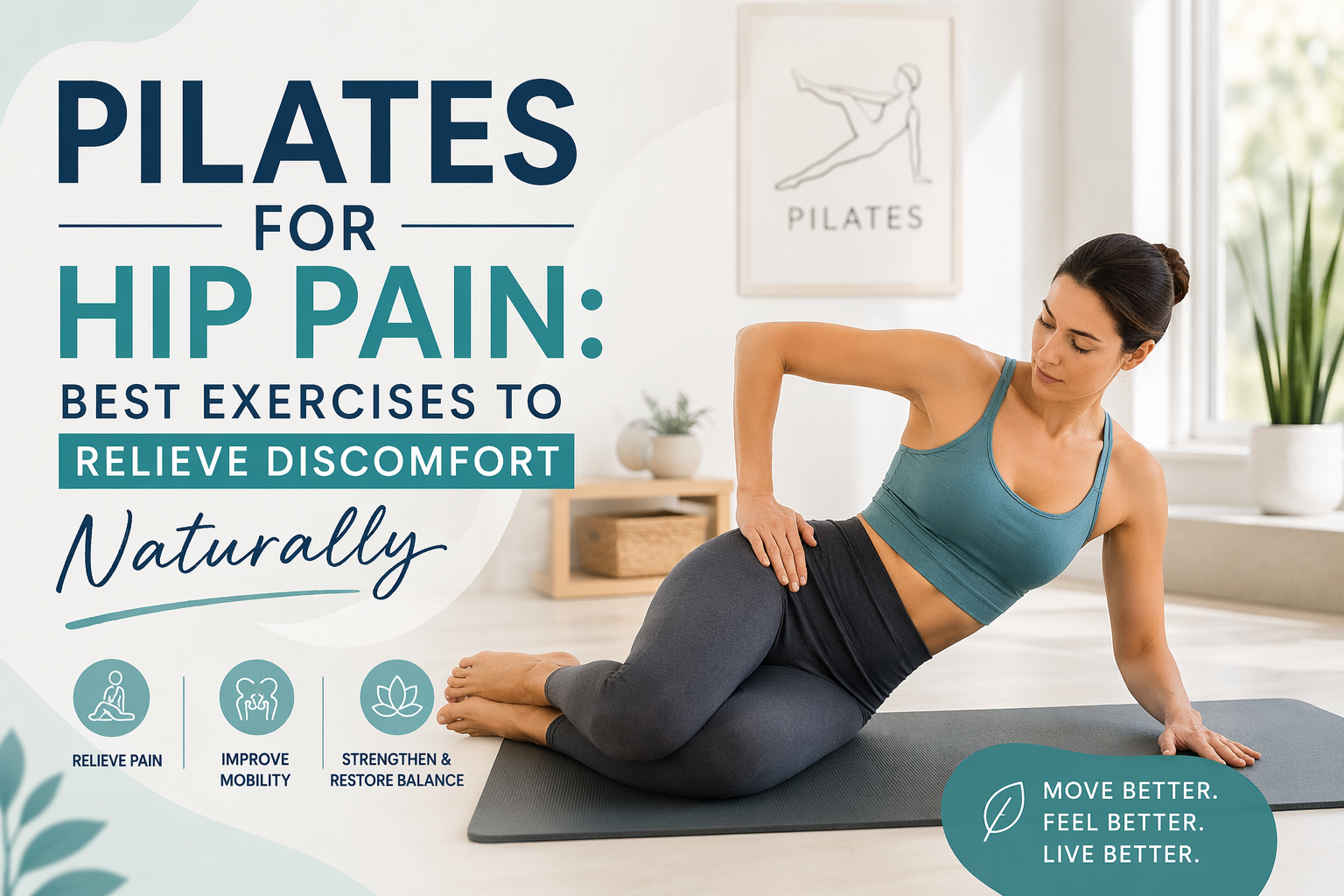
Hip discomfort can quietly affect every part of your daily routine from walking and sitting to sleeping and exercising. One of the safest and most effective ways to manage this issue naturally is through pilates for hip pain. This gentle, controlled movement system focuses on strengthening deep muscles, improving alignment, and restoring natural mobility without putting stress on the joints.
In this refreshed, expert-guided guide, you’ll learn how Pilates supports hip recovery, the most effective exercises, and how consistency can help you reduce hip pain with pilates in a sustainable way.
Understanding Hip Pain: Why It Happens More Often Today
Modern lifestyles long sitting hours, poor posture, and low physical activity are major contributors to hip pain. Common causes include:
- Tight hip flexors from prolonged sitting
- Weak glutes and core muscles
- Muscle imbalance between legs and pelvis
- Lack of mobility and stretching
- Overuse during walking, running, or workouts
From my experience working with movement-based rehabilitation clients, I’ve noticed that most hip pain cases are not due to injury alone—but due to long-term movement dysfunction. This is exactly where pilates for hip pain becomes highly effective.
How Pilates Helps in Hip Pain Relief
Pilates is not random stretching—it is a structured system that retrains how your body moves.
Here’s how it works:
- Activates deep stabilizing muscles around hips and core
- Improves pelvic alignment and posture
- Reduces pressure on hip joints
- Enhances flexibility without overloading tissues
- Corrects movement imbalances causing pain
This is why experts often recommend pilates exercises for hip pain in both preventive care and rehabilitation programs.
At The Pilates studio, we focus on controlled progression so clients experience safe and steady improvement instead of temporary relief.
Best Pilates Exercises for Hip Pain Relief
These exercises are simple, safe, and highly effective when performed consistently.
1. Pelvic Tilts (Foundation Movement)
A key beginner exercise for alignment.
- Lie on your back, knees bent
- Gently tilt pelvis upward and downward
- Keep breathing steady
This foundational movement is essential in pilates for hip pain routines.
- Glute Bridge
Strengthens hips and relieves lower-body tension.
- Lie on your back with feet flat
- Lift hips slowly while squeezing glutes
- Hold for 3–5 seconds
One of the most powerful ways to reduce hip pain with pilates.
3. Clamshell Exercise
Targets deep hip stabilizers.
- Lie on your side, knees bent
- Open top knee while keeping feet together
- Avoid rocking hips
Excellent for pilates for hip stiffness and stability.
4. Leg Circles
Improves joint mobility and control.
- Lie on your back, one leg extended
- Draw slow circles in the air
- Maintain core engagement
A core movement in pilates exercises for hip pain programs.
5. Hip Flexor Stretch (Seated or Kneeling)
Releases tight front hip muscles.
- Step one leg back into a stretch
- Keep spine upright
- Hold and breathe deeply
This helps restore natural hip movement.
Why Consistency Matters in Pilates Practice
Pilates is not a quick fix—it is a long-term movement correction method. Even 15–20 minutes daily can create noticeable improvements.
In my experience, people who stay consistent with pilates for hip pain often report:
- Less stiffness in the morning
- Improved walking comfort
- Better posture and balance
- Reduced dependency on pain relief methods
At The Pilates studio, we always emphasize mindful repetition over intensity. Healing happens through consistency, not force.
Professional Perspective
Hip pain is rarely isolated—it is often linked with overall movement patterns, posture habits, and core weakness.
Pilates addresses all these factors together, making it one of the most recommended movement therapies globally. That’s why pilates for hip pain is widely used in physiotherapy and functional rehabilitation programs.
At The Pilates studio, we design guided sessions that prioritize safety, alignment, and gradual progress so every individual can benefit regardless of fitness level.
Tips to Get Better Results
- Move slowly—never rush Pilates exercises
- Focus on controlled breathing
- Avoid pain during movement (mild stretch is okay)
- Combine Pilates with walking or light activity
- Stay consistent for at least 3–4 weeks
These habits significantly improve results from pilates exercises for hip pain.
Conclusion
Hip pain doesn’t have to limit your lifestyle. With the right approach, you can restore strength, flexibility, and confidence in movement naturally. Pilates for hip pain offers a safe, effective, and sustainable way to improve hip function without harsh impact or medication dependence.
Start small, stay consistent, and focus on quality movement. Over time, you’ll notice reduced stiffness, improved posture, and smoother daily movement.
At The Pilates studio, we believe healing begins with mindful control and awareness—and Pilates is one of the most powerful tools to achieve long-term hip health naturally.
FAQs
1. Is Pilates effective for hip pain?
Yes, pilates for hip pain is highly effective as it strengthens stabilizing muscles and improves joint alignment safely.
2. How quickly can I see results?
Most people notice improvement within 2–4 weeks of consistent pilates exercises for hip pain practice.
3. Can Pilates help with hip stiffness?
Yes, pilates for hip stiffness improves flexibility, mobility, and reduces tightness effectively.
4. How often should I do Pilates for hip pain?
3–5 times per week is ideal to reduce hip pain with pilates sustainably.
5. Do I need equipment for these exercises?
No, most pilates for hip pain exercises can be done at home using just a mat.