
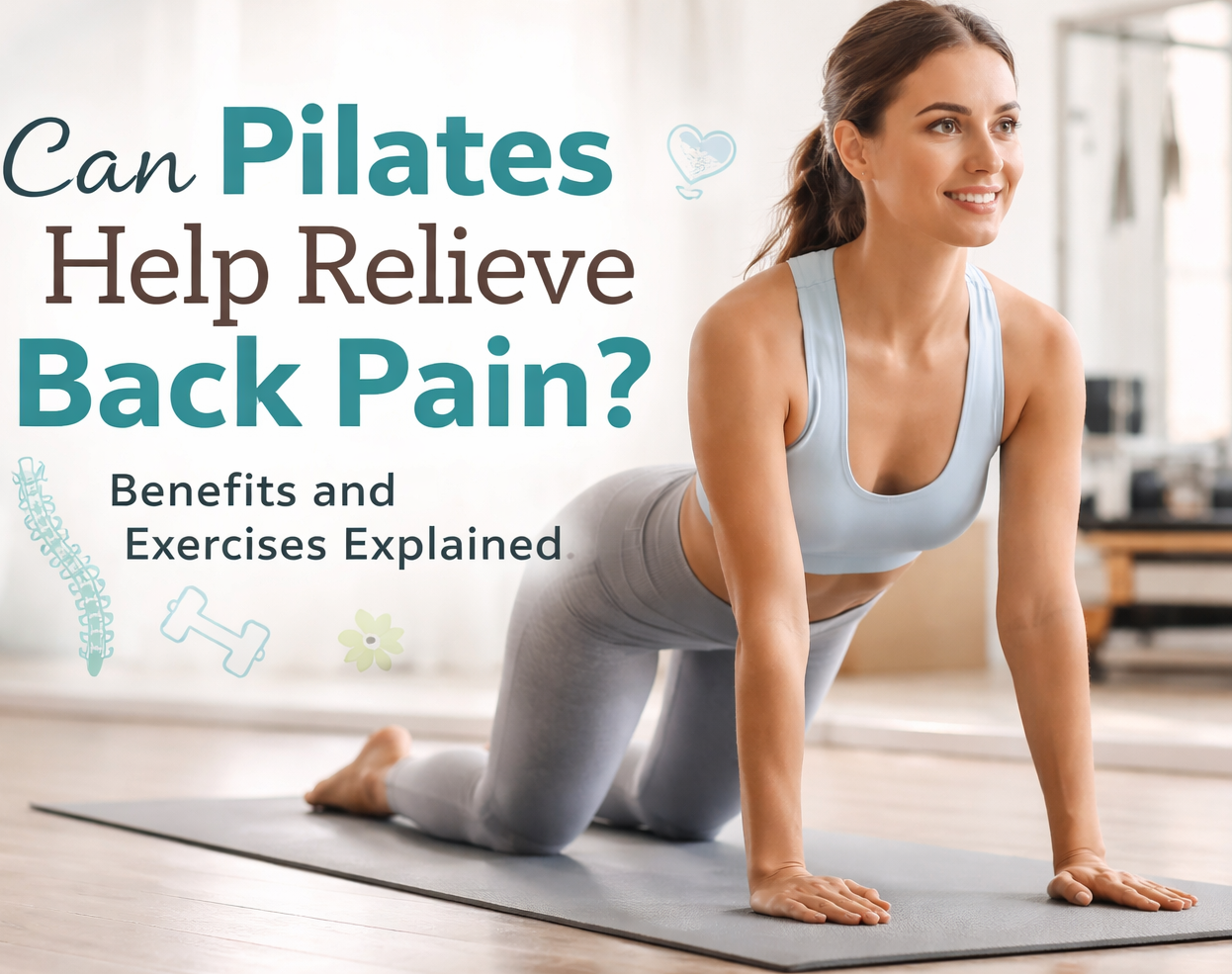
Back pain has quietly become one of the most common health issues today. From long hours at a desk to poor posture and limited physical activity, modern lifestyles often put extra pressure on the spine. Many people experience stiffness in the morning, discomfort while sitting, or pain after standing for long periods.
While medications and temporary treatments may provide quick relief, they rarely address the root cause of the problem. This is why more people are turning to Pilates for back pain as a safe and long-term solution.
But the question many people still ask is simple: Does Pilates help back pain?
In many cases, yes. Pilates focuses on strengthening the core muscles that support the spine, improving posture, and helping the body move more efficiently. Over time, this can significantly reduce pressure on the lower back and improve overall spinal health.
In this guide, we will explore the benefits of Pilates for back pain, understand how it works, and look at some of the best Pilates exercises for lower back pain.
Why Back Pain Happens
To understand how Pilates helps, it’s important to understand what causes back pain in the first place.
Your spine relies on a group of muscles known as the core. These include the abdominal muscles, pelvic muscles, hips, and lower back muscles. When these muscles are weak, tight, or imbalanced, the spine loses support.
Think of your core as the body’s natural support system. If this support system becomes weak, the spine starts taking extra pressure, which can lead to discomfort or pain.
Some of the most common causes of back pain include:
- Poor posture while sitting or standing
- Long hours of desk work
- Weak core muscles
- Lack of regular physical activity
- Muscle imbalance
- Stress and tension in the body
This is where Pilates for lower back pain becomes extremely effective. Pilates focuses on strengthening the deep muscles that stabilize the spine and support better movement patterns.
What Is Pilates?
Pilates is a low-impact exercise method designed to improve strength, flexibility, balance, and posture. It focuses on controlled movements combined with breathing techniques that activate the core muscles.
Unlike high-intensity workouts that may put stress on the body, Pilates emphasizes slow, precise movements. Each exercise is performed with control and proper alignment.
Because of this gentle yet effective approach, Pilates exercises for back pain are widely recommended by physiotherapists and movement experts.
Professional training environments like THE PILATES STUDIO often guide individuals through structured sessions that focus on posture correction, muscle balance, and safe movement.
Does Pilates Help Back Pain?
One of the most common questions people ask is does Pilates help back pain.
From both professional experience and practical results, Pilates works because it targets the deeper muscles responsible for stabilizing the spine.
Instead of only relieving symptoms, Pilates helps strengthen the body so that pain is less likely to return.
Here are some ways Pilates for back pain supports spinal health.
Strengthens the Core
The core muscles act like a natural brace for the spine. Pilates activates deep muscles such as the transverse abdominis and multifidus, which play a key role in spinal stability.
When these muscles become stronger, they reduce the pressure placed on the lower back.
Improves Posture
Poor posture is one of the biggest reasons people experience back pain. Slouching or leaning forward while working can put constant stress on the spine.
Pilates helps retrain the body to maintain proper alignment.
Improves Flexibility
Tight muscles around the hips, hamstrings, and lower back often contribute to discomfort. Pilates stretches and lengthens these muscles, improving mobility and reducing stiffness.
Restores Muscle Balance
Many people unknowingly rely too much on certain muscles while others remain weak. This imbalance can cause unnecessary strain on the spine.
Pilates exercises help restore balance throughout the body.
These improvements explain the major benefits of Pilates for back pain.
Benefits of Pilates for Back Pain
Regular Pilates practice offers several long-term benefits for people dealing with back discomfort.
Some important benefits of Pilates for back pain include:
- Stronger core muscles that support the spine
- Improved posture and body alignment
- Reduced pressure on spinal discs
- Increased flexibility and mobility
- Better balance and coordination
- Lower risk of future back injuries
Many people who practice Pilates for lower back pain notice that everyday activities such as sitting, walking, or lifting objects become easier and less painful.
Best Pilates Exercises for Lower Back Pain
Certain exercises are particularly effective in strengthening the spine and reducing discomfort. These Pilates exercises for back pain focus on stability, flexibility, and core strength.
Pelvic Tilt
The pelvic tilt is one of the most beginner-friendly exercises for back pain.
How to perform
- Lie on your back with knees bent and feet flat on the floor.
- Keep your arms relaxed at your sides.
- Slowly tilt your pelvis so your lower back presses into the floor.
- Hold for a few seconds and release.
This exercise is commonly included in Pilates for lower back pain programs.
Cat-Cow Stretch
The Cat-Cow stretch improves spinal flexibility and reduces stiffness.
Steps
- Start on your hands and knees.
- Slowly arch your back while lifting your chest.
- Then round your spine while tucking your chin.
- Repeat slowly while breathing deeply.
Bird Dog Exercise
Bird Dog strengthens the muscles that stabilize the spine.
How to perform
- Start on your hands and knees.
- Extend one arm forward and the opposite leg backward.
- Keep your core engaged and your back straight.
- Hold for a few seconds and switch sides.
This movement is often considered one of the best Pilates exercises for lower back pain.
Glute Bridge
Strong glutes reduce pressure on the lower back.
Steps
- Lie on your back with knees bent.
- Press through your heels and lift your hips upward.
- Engage your glutes and core.
- Slowly lower your hips back down.
Spine Stretch Forward
This exercise helps improve flexibility in the spine and hamstrings.
Steps
- Sit upright with legs extended forward.
- Stretch your arms forward.
- Slowly round your spine and reach forward.
- Return to the starting position.
Is Pilates Good for Back Pain Relief?
Many people also ask, is Pilates good for back pain relief.
For many individuals, Pilates offers a safe and sustainable way to improve spinal health. Because it focuses on controlled movement and muscle activation, it strengthens the body without putting extra strain on the joints.
Guided sessions at THE PILATES STUDIO help individuals learn correct posture, breathing techniques, and safe exercises that match their fitness level.
With proper guidance and consistent practice, Pilates can become a powerful tool for long-term back pain management.
Tips for Practicing Pilates Safely
To get the most benefits from Pilates for back pain, follow these simple tips:
- Start with beginner-friendly exercises
- Focus on slow and controlled movements
- Maintain proper breathing during exercises
- Avoid pushing through sharp pain
- Practice under trained instructors when possible
Many beginners prefer guided sessions at THE PILATES STUDIO, where instructors help ensure proper technique and posture.
Consistency is key. Practicing Pilates two or three times a week can gradually improve strength, flexibility, and spinal stability.
Final Thoughts
Back pain can affect daily life, productivity, and overall comfort. While quick treatments may provide temporary relief, Pilates for back pain focuses on strengthening the body from within.
By improving core strength, posture, and flexibility, Pilates helps support the spine and reduce long-term discomfort.
The long-term benefits of Pilates for back pain include stronger muscles, better body awareness, and improved movement patterns.
If you have been wondering can Pilates help relieve back pain, the answer for many people is yes. With regular practice and proper guidance, Pilates can help restore balance in the body and support a healthier spine.
Frequently Asked Questions (FAQs) About Pilates for Back Pain
1. Can Pilates help relieve back pain?
Yes, Pilates for back pain can be very effective. Pilates strengthens the core muscles that support the spine and improves posture. When the body becomes stronger and better aligned, the pressure on the lower back reduces, which can help relieve discomfort over time.
2. Is Pilates good for lower back pain?
Yes, Pilates for lower back pain is often recommended by physiotherapists and fitness experts. The slow, controlled movements help strengthen the muscles around the spine, improve flexibility, and support better posture, all of which help reduce pain.
3. What are the best Pilates exercises for lower back pain?
Some of the best Pilates exercises for lower back pain include pelvic tilts, glute bridges, bird dog, cat-cow stretch, and spine stretch forward. These exercises help strengthen the core, improve spinal stability, and increase flexibility.
4. How often should you do Pilates for back pain relief?
For noticeable results, many experts recommend practicing Pilates for back pain two to three times per week. Regular sessions help strengthen the core muscles and improve posture, which gradually reduces back discomfort.
5. Does Pilates strengthen the muscles that support the spine?
Yes, one of the major benefits of Pilates for back pain is that it strengthens deep core muscles such as the transverse abdominis and multifidus. These muscles act like a natural support system for the spine and help prevent future injuries.
6. Is Pilates safe for people with chronic back pain?
Pilates is generally safe for people dealing with chronic back pain when exercises are performed correctly. Beginner-friendly movements and guided sessions help ensure proper technique and reduce the risk of strain.
7. Can beginners start Pilates if they have back pain?
Yes, beginners can start Pilates exercises for back pain with simple and low-impact movements. Starting slowly and focusing on proper form helps build strength and flexibility safely.
8. How long does it take for Pilates to reduce back pain?
Many people begin to notice improvements within a few weeks of consistent practice. However, the time it takes for Pilates for lower back pain to show results may vary depending on the severity of the condition and exercise consistency.
9. Does Pilates improve posture and reduce back strain?
Yes, Pilates focuses heavily on body alignment and posture. As posture improves, the spine experiences less stress, which helps reduce back pain and prevents future problems.
10. Is Pilates better than regular exercise for back pain?
Pilates is particularly beneficial because it focuses on controlled movements, core stability, and spinal alignment. While many forms of exercise can help, Pilates for back pain specifically targets the muscles that support the spine, making it highly effective for back health.